
Author

admin

Browsing

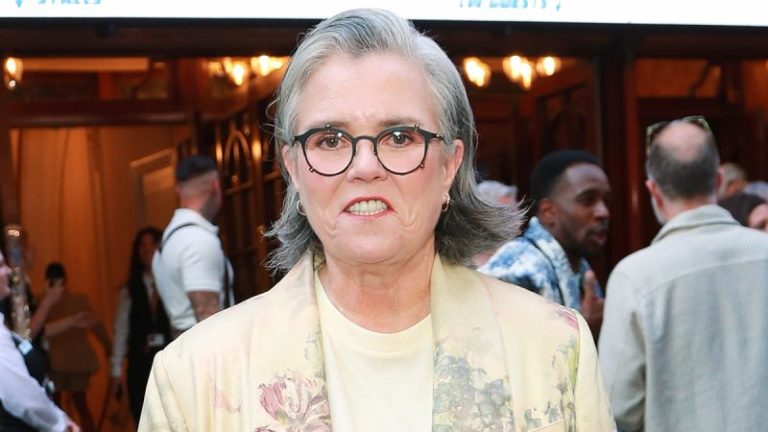
After a self-imposed political exile to Ireland after President Donald Trump’s re-election, Rosie O’Donnell quietly returned to the United States.

During an interview with Chris Cuomo on his new show, ‘SiriusXM’s Cuomo Mornings,’ the 63-year-old actress revealed she recently returned to the country to visit her family. The actress moved to Ireland with her teenage daughter in January 2025, just prior to President Trump’s second inauguration. 

‘I was recently home for two weeks, and I did not really tell anyone,’ she told Cuomo. ‘I just went to see my family. I wanted to see how hard it would be for me to get in and out of the country. I wanted to feel what it felt like. I wanted to hold my children again. And I hadn’t been home in over a year.’

She then shared that she ‘wanted to make sure that it was safe’ for her and her daughter to come back over the summer so that they could be with family during her break from school.

When speaking to Cuomo, she went on to discuss how America ‘feels like a very different country’ to her than when she lived here because she hasn’t ‘been watching the news’ or keeping up with ‘American culture television’ while living in Ireland.

‘I’ve been in a place where celebrity worship does not exist,’ she explained. ‘I’ve been in a place where there’s more balance to the news. There’s more balance to life. It’s not everyone trying to get more, more, more. It’s a very different culture. And I felt the United States in a completely different way than I ever had before I left.’

O’Donnell claimed she doesn’t ‘regret leaving at all’ and feels she did ‘what I needed to do to save myself, my child and my sanity.’

‘And I’m very happy that I’m not in the midst of it there because the energy that I felt while in the United States was — if I could use the most simple word I can think of — it was scary,’ she added. ‘There’s a feeling that something is really wrong, and no one is doing anything about it.’

The bad blood between O’Donnell and President Trump goes back 20 years, when she criticized him while on ‘The View.’ They continued to throw jabs at each other over the years, with O’Donnell telling the Irish radio show ‘Sunday with Miriam,’ ‘He uses me as a punching bag and a way to sort of rile his base.’

After announcing she had moved to Ireland, the star shared she was applying for Irish citizenship during an interview with the U.K.’s Daily Telegraph in October 2025.

‘What great news for America!’ White House spokesperson Abigail Jackson told Fox News Digital about the news at the time.

President Trump had previously threatened to revoke O’Donnell’s American citizenship twice before through posts on Truth Social.

‘Because of the fact that Rosie O’Donnell is not in the best interests of our Great Country, I am giving serious consideration to taking away her Citizenship,’ he wrote in July 2025. ‘She is a Threat to Humanity, and should remain in the wonderful Country of Ireland, if they want her. GOD BLESS AMERICA!’

He later renewed the threats in September 2025, writing, ‘She is not a Great American and is, in my opinion, incapable of being so!’

O’Donnell fired back against the president’s threats, using the Constitution as her defense against the President.

‘He can’t do that because it’s against the Constitution, and even the Supreme Court has not given him the right to do that. … He’s not allowed to do that. The only way you’re allowed to take away someone’s citizenship is if they renounce it themselves, and I will never renounce my American citizenship,’ the ‘Now and Then’ star said. ‘I am a very proud citizen of the United States.

‘I am also getting my citizenship here so I can have dual citizenship in Ireland and the United States because I enjoy living here,’ she added. ‘It’s very peaceful. I love the politics of the country. I love the people and their generous hearts and spirit. And it’s been very good for my daughter. But I still want to maintain my citizenship in the United States. My children are there. I will be there visiting and go to see them. And I have the freedom to do that, as does every American citizen.’

Under the United States Constitution, a president does not have the power to strip the citizenship of someone born in the country, meaning since O’Donnell was born in New York, her citizenship is protected by the 14th Amendment.


This post appeared first on FOX NEWS

The federal government has entered its third partial shutdown of the last half-year after Congress failed to reach an agreement on all 12 of its annual spending bills.

Unlike past shutdowns, however, this one just affects the Department of Homeland Security (DHS). It comes after Democrats walked away from a bipartisan deal to fund the department amid uproar over President Donald Trump’s immigration crackdown in Minneapolis.

And while some 97% of the federal government has been funded at this point, a DHS shutdown will still have effects on everyday Americans — effects that will become more apparent the longer the standoff continues.

Air travel delays

Disruptions to the TSA, whose agents are responsible for security checks at nearly 440 airports across the country, could perhaps be the most impactful part of the partial shutdown to Americans’ everyday lives.

Acting Administrator Ha Nguyen McNeill told lawmakers at a hearing on Wednesday that around 95% of TSA employees — roughly 61,000 people — are deemed essential and will be forced to work without pay in the event of a shutdown.

‘We heard reports of officers sleeping in their cars at airports to save money on gas, selling their blood and plasma, and taking on second jobs to make ends meet,’ she said of the last shutdown.

But it would take some time before TSA funding could translate to delays. TSA agents, like other essential federal workers, received back pay once the shutdown was over. Those who did not miss shifts also got a $10,000 bonus for added relief.

TSA paychecks due to be issued on March 3 could see agents getting reduced pay depending on the length of the shutdown. Agents would not be at risk of missing a full paycheck until March 17.

If that happens, however, Americans could see delays or even cancellations at the country’s busiest airports as TSA agents are forced to call out of work and get second jobs to make ends meet.

Natural disaster reimbursement

The Federal Emergency Management Agency (FEMA) is one of the largest and most critical recipients of federal funding under DHS.

Associate Administrator of the Office of Response and Recovery Gregg Phillips told lawmakers on Wednesday that FEMA has enough funds to continue disaster response through a shutdown in the immediate future, but that its budget would be strained in the event of an unforeseen ‘catastrophic disaster.’

That means Americans hit by an unexpected natural disaster during the shutdown could see delayed federal reimbursement for their homes and small businesses.

Others who have already lived through a natural disaster in the last year but still have not received their checks — FEMA is currently working through a backlog worth billions of dollars — could see that relief delayed even further during the shutdown.

‘In the 45 days I’ve been here … we have spent $3 billion in 45 days on 5,000 projects,’ Phillips said. ‘We’re going as fast as we can. We’re committed to reducing the backlog. I can’t go any faster than we actually are. And if this lapses, that’s going to stop.’

Worker visa processing

American business owners who rely on certain types of worker visas could see processing times extended during a DHS shutdown.

That’s because United States Citizenship and Immigration Services (USCIS) programs are run under DHS and are responsible for processing most immigration applications as well as temporary visas.

The majority of those programs are funded by fees and are largely untouched. However, areas like e-Verify, the EB-5 Immigrant Investor Regional Center Program, Conrad 30 J-1 doctors, and non-minister religious workers all rely on funding appropriated by Congress, according to the American Immigration Lawyers Association.

USCIS could allow employers to use alternate processes if e-Verify is disrupted during a shutdown, but it’s not clear how much time it would add to business owners’ day-to-day responsibilities to learn a new route for that paperwork.

This post appeared first on FOX NEWS

Emboldened congressional Democrats are expanding their battleground map for this year’s midterm elections, when Republicans will be defending their razor-thin majority in the House.

But the National Republican Congressional Committee (NRCC) chairman, Rep. Richard Hudson, isn’t buying it.

‘I mean, I’ve read fiction my whole life, and I recognize it when I see it,’ Hudson said in an exclusive with Fox News.

Republicans currently control the House 218-214, with two right-tilting districts and one left-leaning seat currently vacant. Democrats need a net gain of just three seats in the midterms to win back the majority for the first time in four years.

The Democratic Congressional Campaign Committee (DCCC) this week added five more offensive opportunities in Colorado, Minnesota, Montana, South Carolina and Virginia to their list of what they consider are vulnerable Republican-held House districts.

That brings the total number of districts Democrats are hoping to flip to 44. The DCCC notes that all five of the new districts they’re adding to their list of ‘offensive targets’ were carried by President Donald Trump by 13 points or fewer in the 2024 elections.

‘Democrats are on offense, and our map reflects the fact that everyday Americans are tired of Republicans’ broken promises and ready for change in Congress,’ DCCC Chair Suzan DelBene emphasized earlier this week.

And DCCC Spokesperson Viet Shelton told Fox News Digital, ‘In a political environment where Democrats are overperforming by more than 17 points in congressional special elections, it’s pretty clear we’re poised to re-take the majority. Momentum and the American people are on our side while Republicans are running scared.’

Asked about the DCCC’s move, Hudson scoffed.

‘They’ve got to have a list they can present to their donors,’ he said as he pointed to the DCCC. ‘But it’s not realistic. I mean, if you look at the map, there are very few seats up for grabs, and the majority of those seats are held by Democrats, but they’re seats that Donald Trump has carried or came very close….if you look at the seats that we’ll be competing for this fall. They’re they’re all favoring Republicans.’

The House GOP campaign chair added, ‘If you look at the map, it’s a Republican map. We just got to go out and win those races.’

The move by the DCCC comes as Democrats are energized, despite the party’s polling woes. Democrats, thanks to their laser focus on affordability amid persistent inflation, scored decisive victories in the 2025 elections and have won or over performed in a slew of scheduled and special ballot box contests since Trump returned to the White House over a year ago.

Republicans, meanwhile, are facing traditional political headwinds in which the party in power in the nation’s capital normally suffers setbacks in the midterm elections. And the GOP is also dealing with Trump’s continued underwater approval ratings.

The latest national surveys, including the most recent Fox News poll, indicate the Democrats ahead of the Republicans by mid-single digits in the so-called generic ballot question, which asks respondents whether they’d back the Democratic or GOP candidate in their congressional district without offering specific candidate names.

Asked about the polls, Hudson said, ‘We almost never lead in the generic ballot. But a single digit generic ballot, we do very well.’

And the House GOP campaign chair added he remains ‘very bullish.’

Cost of living concerns helped boost Trump and Republicans to sweeping victories in 2024, but affordability and overall economic concerns may work against them this year.

While the latest AP/NORC national poll indicated the GOP with a slight advantage over Democrats on handling the economy, a bunch of surveys, including the latest Fox News poll, indicate many Americans feel things are worse off than they were a year ago and remain pessimistic about the economy.

But on Friday the latest government numbers indicated that inflation eased during January.

And Hudson says the economy is still a winning issue for Republicans.

Pointing to the numerous tax cuts kicking in this year in the GOP’s sweeping One Big Beautiful Bill Act, which Trump signed into law last summer, Hudson touted ‘we put policies in place that are going to bring prosperity to the American people, and they’re starting to feel it.’

‘And as we move into tax season…folks who work overtime, folks who work for tips, they’re going to see a lot more money in their pocket thanks to no tax on tips, no tax on overtime,’ he added.

The GOP is also dealing with a low propensity issue: MAGA voters who don’t always go to the polls when Trump’s name isn’t on the ballot.

‘Our voters tend to be more working-class voters, and you have to put in extra effort to get them to the polls,’ Hudson said. ‘We know that’s our challenge. President Trump knows that’s the challenge, and he’s committed to helping us.’

Pointing to the NRCC’s annual fundraising gala, which Trump will once again headline this year, Hudson said this dinner will be a great kickoff for this year. We raised a whole lot of money with President Trump last year. We plan to raise a lot of money in March with President Trump, and then he’s going to get out on the campaign trail and help us turn out those voters and make that case.’

Asked about midterm election predictions, Hudson shied away from giving any hard numbers.

‘Not going to give you a number, but we’re going to hold the majority,’ he predicted. ‘President Trump was elected with a very specific agenda. We delivered almost his entire domestic agenda, and we’re going to go back to the voters and say promises made, promises kept, and they’re going to keep this House majority.’

This post appeared first on FOX NEWS

Rua Gold INC. (TSXV: RUA,OTC:NZAUF) (OTCQB: NZAUF) (‘Rua Gold’ or the ‘Company’) is pleased to announce that the Company will be uplisting to the Toronto Stock Exchange (the ‘TSX’). The common shares of the Company (the ‘Common Shares’) will be voluntarily delisted from the TSX Venture Exchange effective as of close of market on Friday, February 13, 2026, and will commence trading on the TSX effective at the opening of the market on Tuesday, February 17, 2026 under its current ticker symbol, ‘RUA’.

Robert Eckford, CEO of Rua Gold, commented: ‘Graduating to the TSX is a significant milestone for Rua Gold. The uplisting will enhance our visibility in the capital markets and enable us to continue to attract key institutional and retail investors as we continue to develop the Reefton Project and Glamorgan Project in New Zealand.’

Rua Gold will continue to remain a ‘reporting issuer’ under applicable Canadian securities laws, and the Common Shares will also remain listed on the OTCQB under the symbol ‘NZAUF’. Shareholders are not required to take any action in connection with the TSX uplisting.

About Rua Gold

Rua Gold is an exploration company, strategically focused on New Zealand. With decades of expertise, their team has successfully taken major discoveries into producing world-class mines across multiple continents. The team is focused on maximizing the asset potential of Rua Gold’s two highly prospective high-grade gold projects.

The Company controls the Reefton Gold District as the dominant landholder in the Reefton Goldfield on New Zealand’s South Island with over 120,000 hectares of tenements, in a district that historically produced over 2Moz of gold grading between 9 and 50g/t.

The Company’s Glamorgan Project solidifies Rua Gold’s position as a leading high-grade gold explorer on New Zealand’s North Island. This highly prospective project is located within the North Islands’ Hauraki district, a region that has produced an impressive 15Moz of gold and 60Moz of silver. Glamorgan is adjacent to OceanaGold Corporation’s biggest gold mining project, Wharekirauponga.

FOR FURTHER INFORMATION PLEASE CONTACT:
Robert Eckford
Phone: (604) 655-7354
Email: reckford@ruagold.com

Neither the TSXV nor its Regulation Services Provider (as that term is defined in the policies of the TSXV) accepts responsibility for the adequacy or accuracy of this release.

Forward-Looking Information

This news release includes certain statements that may be deemed ‘forward-looking statements’. All statements in this news release, other than statements of historical facts, that address events or developments that the Company expects to occur, are forward-looking statements. Forward-looking statements are statements that are not historical facts and are generally, but not always, identified by the words ‘expects’, ‘plans’, ‘anticipates’, ‘believes’, ‘intends’, ‘estimates’, ‘projects’, ‘potential’ and similar expressions, or that events or conditions ‘will’, ‘would’, ‘may’, ‘could’ or ‘should’ occur and specifically include statements regarding: the Company’s strategies, expectations, planned operations or future actions including but not limited to exploration programs at its New Zealand properties; the intended listing date on the TSX and the delisting date on the TSX Venture Exchange. Although the Company believes the expectations expressed in such forward-looking statements are based on reasonable assumptions, such statements are not guarantees of future performance and actual results may differ materially from those in the forward-looking statements.

Investors are cautioned that any such forward-looking statements are not guarantees of future performance and actual results or developments may differ materially from those projected in the forward-looking statements. A variety of inherent risks, uncertainties and factors, many of which are beyond the Company’s control, affect the operations, performance and results of the Company and its business, and could cause actual events or results to differ materially from estimated or anticipated events or results expressed or implied by forward looking statements. Some of these risks, uncertainties and factors include: general business, economic, competitive, political and social uncertainties; risks related to the effects of the Russia-Ukraine war; risks related to climate change; operational risks in exploration, delays or changes in plans with respect to exploration projects or capital expenditures; the actual results of current exploration activities; conclusions of economic evaluations; changes in project parameters as plans continue to be refined; changes in labour costs and other costs and expenses or equipment or processes to operate as anticipated, accidents, labour disputes and other risks of the mining industry, including but not limited to environmental hazards, flooding or unfavorable operating conditions and losses, insurrection or war, delays in obtaining governmental approvals or financing, and commodity prices. This list is not exhaustive of the factors that may affect any of the Company’s forward-looking statements and reference should also be made to the Company’s documents filed under its SEDAR+ profile at www.sedarplus.ca for a description of additional risk factors.

Forward-looking statements are based on the beliefs, estimates and opinions of the Company’s management on the date the statements are made. Except as required by applicable securities laws, the Company undertakes no obligation to update these forward-looking statements in the event that management’s beliefs, estimates or opinions, or other factors, should change.

To view the source version of this press release, please visit https://www.newsfilecorp.com/release/283786

News Provided by TMX Newsfile via QuoteMedia

This post appeared first on investingnews.com

Latvian startup Deep Space Energy announced it has raised approximately US$1.1 million in a combination of private investment and public funding to advance a radioisotope-based power generator designed to operate on the Moon.

The company closed a US$416,500 pre-seed round led by Outlast Fund and angel investor Linas Sargautis, a former co-founder of NanoAvionics. It also secured an additional US$690,200 in public contracts and grants from the European Space Agency (ESA), NATO’s Defense Innovation Accelerator for the North Atlantic (DIANA), and the Latvian government.

Deep Space Energy is building a compact power system that uses radioisotopes, which are materials derived from nuclear waste that generate heat through natural decay, to produce electricity.

Founder and CEO Mihails Ščepanskis said the system converts that heat into electrical power while using significantly less fuel than conventional radioisotope thermoelectric generators (RTGs) currently deployed in space.

“Our technology, which has already been validated in the laboratory, has several applications across the defense and space sectors.

“First, we’re developing an auxiliary energy source to enhance the resilience of strategic satellites. It provides the redundancy of satellite power systems by supplying backup power that does not depend on solar energy, making it crucial for high-value military reconnaissance assets,” Ščepanskis said.

The company emphasized that the generator is not designed for weapons applications. Instead, it is targeting dual-use satellites operating in Medium Earth Orbit (MEO), Geostationary Orbit (GEO) and Highly Elliptical Orbit (HEO), all of which focus on communications, early warning systems, and reconnaissance capabilities.

These satellites support defense functions including synthetic aperture radar for detecting troop movements, signal intelligence systems, and missile-launch detection platforms.

According to Ščepanskis, recent geopolitical events have underscored their importance.

The war in Ukraine demonstrated the decisive role of satellite-based reconnaissance data. In 2025, Ukraine lost its beachhead in Russia’s Kursk Oblast during a period when the US temporarily halted the sharing of satellite intelligence.

“As Europe is trying to become more independent, it is imperative to produce satellites with advanced capabilities on our own. Our technology provides an auxiliary energy source for satellites, which makes them more resilient to non-kinetic attacks and malfunctions,” he added.

Beyond defense, Deep Space Energy is positioning its technology for lunar exploration. The company says its generator could support upcoming programmes such as NASA and ESA’s Artemis and Argonaut initiatives, as well as future lunar rover missions and the Moon Village framework.

On the Moon, temperatures can fall below minus 150 degrees Celsius during night cycles that last roughly 354 hours, making solar power unreliable.

Deep Space Energy estimates that about two kilograms of Americium-241 could generate 50 watts of power for a rover, compared with around 10 kilograms required by legacy RTG systems for similar output.

By reducing fuel requirements, the company argues it could extend rover lifetimes across multiple lunar day-night cycles, potentially lasting years.

Securities Disclosure: I, Giann Liguid, hold no direct investment interest in any company mentioned in this article.

This post appeared first on investingnews.com

Copper Quest Exploration Inc. (CSE: CQX,OTC:IMIMF; OTCQB: IMIMF; FRA: 3MX) (‘Copper Quest’ or the ‘Company’) announces that it has entered into a securities for debt settlement agreement dated February 11, 2026 (the ‘Agreement’) with a professional advisor of the Company.

Pursuant to the Agreement, the Company has agreed to settle debt in the amount of $113,405.28 through the issuance of 872,348 units (each, a ‘Unit‘) at a deemed price of $0.13 per Unit, whereby each Unit shall be comprised of one (1) common share in the capital of the Company (each a ‘Share‘) and one (1) Share purchase warrant (each whole, being a ‘Warrant‘). Each Warrant will be convertible into an additional Share (a ‘Warrant Share‘) at an exercise price of $0.165 per Warrant Share and will expire on the date that is two (2) years following the date of issuance (the ‘Expiry Date‘). The Expiry Date shall be subject to acceleration should the closing price of the Shares on the Canadian Securities Exchange (or any such other stock exchange in Canada as the Shares may trade at the applicable time) equal or exceed $0.50 for ten (10) consecutive trading days at any time from the date which is 4 months following their date of issue, the Company may accelerate the expiry date of the Warrants such that the Warrants shall expire on the date which is 30 calendar days following the date a news release is issued by the Company announcing the accelerated expiry date of the Warrants.

The Agreement and the issuance of the securities thereunder are subject to the approval of the CSE. The securities will be subject to a hold period of four months and one day pursuant to CSE policies and applicable securities laws.

About Copper Quest

The company’s land holdings comprise 7 projects that span over 45,000 hectares in great mining jurisdictions of Canada and the USA. Copper Quest is committed to building shareholder value through acquisitions, discovery-driven exploration, and responsible development of its North American critical mineral portfolio of assets. The Company’s common shares are principally listed on the Canadian Stock Exchange under the symbol ‘CQX’. For more information on Copper Quest, please visit the Company’s website at www.copper.quest.

Copper Quest has a 100% interest in the past-producing Alpine Gold Mine located approximately 20 kilometers northeast of the City of Nelson British Columbia, spanning 4,611.49 hectares with a 2018 National Instrument 43-101 Standards of Disclosure for Mineral Projects historical inferred resource of 268,000 tonnes, estimated using a cut-off grade of 5.0 g/t Au and an average grade of 16.52 g/t Au, that represents an inferred resource of 142,000 oz of gold (McCuaig & Giroux, 2018)*. Apart from the Alpine Mine itself the property hosts 4 other less explored significant vein systems including the past-producing King Solomon vein workings, the Black Prince and the Cold Blow veins system, and the Gold Crown vein system. *The Company has not yet completed sufficient work to verify the 2018 historic inferred resource results.

Copper Quest has a 100% interest in the road accessible Stars Porphyry Copper-Molybdenum Property, spanning 9,693 hectares in central British Columbia’s Bulkley Porphyry Belt with Tana Zone discovery drill intersection highlights of 0.466% Cu over 195.07m* in drill hole DD18SS004 from 23.47m, 0.200% Cu over 396.67m* in drill hole DD18SS010 from 29.37m, and 0.205% Cu over 207.27m* in drill hole DD18SS015 from 163.98m. This highly prospective, approximately 5 X 2.5 kilometer annular magnetic anomaly is interpreted to represent an altered monzonite intrusion and surrounding hornfels.

Copper Quest has a 100% interest in the road accessible Kitimat Copper-Gold Property, spanning 2,954 hectares within the Skeena Mining Division of northwestern British Columbia located northwest of the deep-water port community of Kitimat, British Columbia. The property benefits from exceptional infrastructure, being within 10 km of tidewater, 1.5 km of rail, and 6 km of high-voltage hydroelectric transmission lines. Exploration on the Kitimat property dates to the late 1960s, with the most significant historical work conducted by Decade Resources Ltd. (2010), which completed 16 diamond drill holes totaling 4,437.5 meters in the Jeannette Cu-Au Zone, and drill intersection highlights of 1.03 g/t Au, 0.54% Cu over 117.07 m in Hole J-7 from 1.52 m, 1.00 g/t Au, 0.55% Cu over 103.65m in Hole J-1 from 9.15 m, 0.80 g/t Au, 0.45% Cu over 107.01m in Hole J-2 from 6.10 m, and 0.41 g/t Au, 0.33% Cu over 112.20m in Hole J-8 from 11.89 m.

Copper Quest has a 100% interest in the Nekash Copper-Gold Project, a porphyry exploration opportunity located in Lemhi County, Idaho, USA, along the prolific Idaho-Montana porphyry copper belt that hosts world-class systems such as Butte and CUMO. The project is fully road-accessible via maintained U.S. highways and forest service roads and consists of 70 unpatented federal lode claims covering 585 hectares.

Copper Quest has a 100% interest in the road accessible Stellar Property, spanning 5,389-hectares in British Columbia’s Bulkley Porphyry Belt contiguous to the Stars Property.

Copper Quest has a 100% interest in the Thane Project located in the Quesnel Terrane of Northern British Columbia spanning over 20,658 hectares with 10 priority targets identified demonstrating significant copper and precious metal mineralization potential.

Copper Quest has an earn-in option of up to 80% and joint-venture agreement on the road accessible Rip Porphyry Copper-Molybdenum Project, spanning 4,700-hectares located in the Bulkley Porphyry Belt in central British Columbia.

On behalf of the Board of Copper Quest Exploration Inc.

Brian Thurston, P.Geo.
Chief Executive Officer and Director
Tel: 778-949-1829

For further information contact:
Investor Relations
info@copper.quest

https://x.com/CSECQX
https://ca.linkedin.com/company/copper-quest

Forward Looking Information

This news release contains certain ‘forward-looking information’ and ‘forward-looking statements’ (collectively, ‘forward-looking statements‘) within the meaning of applicable securities legislation. All statements, other than statements of historical fact included herein, including without limitation, future operations and activities of Copper Quest, are forward-looking statements. Forward-looking statements are frequently, but not always, identified by words such as ‘expects’, ‘anticipates’, ‘believes’, ‘intends’, ‘estimates’, ‘potential’, ‘possible’, and similar expressions, or statements that events, conditions, or results ‘will’, ‘may’, ‘could’, or ‘should’ occur or be achieved. Forward-looking statements reflect the beliefs, opinions and projections on the date the statements are made and are based upon a number of assumptions and estimates based on or related to many of these factors. Such factors include, without limitation, risks associated with possible accidents and other risks associated with mineral exploration operations, the risk that the Company will encounter unanticipated geological factors, risks associated with the interpretation of exploration results, the possibility that the Company may not be able to secure permitting and other governmental clearances necessary to carry out the Company’s exploration plans, the risk that the Company will not be able to raise sufficient funds to carry out its business plans, and the risk of political uncertainties and regulatory or legal changes that might interfere with the Company’s business and prospects. Readers should not place undue reliance on the forward-looking statements and information contained in this news release concerning these items. The Company does not assume any obligation to update the forward-looking statements of beliefs, opinions, projections, or other factors, should they change, except as required by applicable securities laws.

The Canadian Securities Exchange has not reviewed, approved or disapproved the contents of this press release, and does not accept responsibility for the adequacy or accuracy of this release.

News Provided by GlobeNewswire via QuoteMedia

This post appeared first on investingnews.com

White House press secretary Karoline Leavitt is making an example of former President Barack Obama for encouraging voters and lawmakers to reject adopting national voter ID laws. 

‘You know how badly the Democrats are panicking when they bring out Obama to spread lies about voter ID,’ Leavitt posted to X Thursday. ‘The fact is that nearly 90% of voters support’ voter ID laws, she continued before posting two screenshots showing two polls reflecting Americans support such laws at around 83% support to 84% support. 

Leavitt’s comments follow the House passing a massive election integrity overhaul bill Wednesday, which includes requiring voters to show a photo ID when casting ballots in federal elections. The bill overall aims to prevent noncitizens from voting in U.S. federal elections, with all but one Democrat, Rep. Henry Cuellar, D-Texas, voting against it. 

Obama was among prominent Democrats encouraging House lawmakers to vote against the measure, claiming it will disenfranchise voters. 

‘Republicans are still trying to pass the SAVE Act—a bill that would make it harder to vote and disenfranchise millions of Americans,’ he posted to X Wednesday evening. ‘Join @RedistrictAct and tell your member of Congress to vote no.’ 

Democrats have argued that voter ID laws can disenfranchise eligible voters because they often require specific, current government-issued IDs that may be a struggle to obtain due to costs, paperwork hurdles or limited DMV access. Republicans have rejected that argument, calling the requirement a common-sense safeguards that would boost confidence in elections, while simultaneously noting that most Americans already need IDs for everyday tasks.

In another post, Leavitt shared that Obama presented his own driver’s license to vote in the 2012 election. Obama voted early that cycle and was seen on camera pulling his Illinois driver’s license from his wallet to flash to poll workers. 

‘Here is Barack Obama showing his photo ID to vote in a past election,’  Leavitt posted. ‘Why are Democrats in Congress so opposed to making this a requirement across the country? Voter ID laws are common sense.’ 

White House spokeswoman Taylor Rogers added that IDs are frequently used by Americans to buy alcohol or get on a plane, which she said shows the hypocrisy of Democrats pushing against the election security overhaul. 

‘Barack Obama and the rest of the Democrats think Americans are stupid, which is why they are blatantly lying about the commonsense election integrity provisions in the popular SAVE Act,’ Rogers told Fox News Digital. 

‘Americans need to show ID to buy alcohol, get on a plane, and even get into the Democratic National Convention — but these hypocrite Democrats don’t want voters to show their ID to cast a ballot. Congressional Democrats’ opposition to the SAVE America Act is indefensible and wildly out of step with the views of the American people.’ 

Fox News Digital reached out to Obama’s office Thursday for comment but did not immediately receive a reply. 

Called the SAVE Act, the legislation would additionally require information-sharing between state election officials and federal authorities in verifying citizenship on current voter rolls, as well as enable the Department of Homeland Security to pursue immigration cases if non-citizens were found to be listed as eligible to vote.

If passed, the new requirements could be implemented for the November midterm elections. It must first pass the Senate before it could land on President Donald Trump’s desk. 

This post appeared first on FOX NEWS

Albemarle (NYSE:ALB) is raising its long-term lithium demand outlook after a breakout year for stationary energy storage, underscoring a shift in the battery materials market that is no longer driven solely by electric vehicles.

The US-based lithium major reported fourth quarter 2025 net sales of US$1.4 billion, up 16 percent year-over-year, with adjusted EBITDA rising 7 percent to US$269 million.

For the full year, Albemarle delivered US$5.1 billion in revenue and US$1.1 billion in adjusted EBITDA, results that CEO Kent Masters said were supported by “strong growth in energy storage and significant cost and productivity improvements.”

But the most consequential update came in the company’s demand outlook.

“We are seeing a diversification of lithium end markets, with stationary storage becoming an increasingly significant demand driver,” Masters told investors during a February 12 conference call, adding that Albemarle has increased its 2030 global lithium demand forecast by 10 percent to a range of 2.8 million to 3.6 million metric tons.

Storage steps into the spotlight

Global lithium demand reached 1.6 million metric tons in 2025, up more than 30 percent year-over-year and in line with Albemarle’s prior projections. Demand growth outpaced supply, tightening inventories and lifting prices into year-end.

For 2026, Albemarle now expects global lithium demand to rise to between 1.8 million and 2.2 million metric tons — growth of 15 to 40 percent — driven by both EV adoption and accelerating deployments of stationary energy storage systems (ESS).

While global EV sales climbed 21 percent in 2025, energy storage was the standout. ESS demand surged more than 80 percent year-over-year, with strong growth across China, North America and Europe.

China, which accounted for roughly 40 percent of ESS shipments, saw demand rise 60 percent. North American shipments jumped 90 percent, reflecting grid stability needs and rising electricity consumption linked to data centers and artificial intelligence. European shipments more than doubled as countries expanded renewables and sought greater energy security.

Demand outside the three major regions grew 120 percent and represented more than 20 percent of global ESS shipments, with Southeast Asia, the Middle East and Australia emerging as key growth markets.

The shift is already visible in Albemarle’s financials. In 2025, energy storage volumes reached 235,000 metric tons of lithium carbonate equivalent, up 14 percent year-over-year and above the high end of the company’s guidance range.

Fourth quarter energy storage net sales rose 23 percent from a year earlier, while segment EBITDA climbed 25 percent, supported by higher lithium pricing and cost improvements.

CFO Neal Sheorey said Albemarle’s updated 2026 scenarios reflect both pricing and operational gains.

Cost discipline, portfolio reset

After weathering a sharp downturn in lithium prices over the past two years, Albemarle has focused on strengthening its balance sheet and lowering its cost base.

In 2025, the company delivered approximately US$450 million in run-rate cost and productivity improvements and is targeting an additional US$100 million to US$150 million in 2026.

Albemarle also announced it will idle operations at its Kemerton lithium hydroxide plant in Western Australia, citing a structural cost gap between Western and Chinese conversion assets.

“There is a gap there between China and the West,” Masters said, pointing to higher labor, power and waste management costs in Australia. Idling the plant is expected to improve adjusted EBITDA beginning in the second quarter, with no impact on sales volumes.

At the same time, Albemarle is streamlining non-core assets.

The company closed the sale of its stake in the Eurocat joint venture in January and expects to complete the sale of a majority stake in its refining catalysts business in the first quarter. Together, the transactions are expected to generate approximately US$660 million in pre-tax proceeds.

“We are committed to maintaining our investment-grade credit profile,” Masters said, adding that deleveraging and disciplined capital allocation remain priorities.

Growth with limited new capital

Despite pulling back on large-scale capital spending, Albemarle expects to deliver a five-year compound annual growth rate of roughly 15 percent in energy storage sales volumes, building on a 25 percent CAGR over the past four years.

Incremental expansions at the Greenbushes mine in Australia, yield improvements at the Salar de Atacama in Chile and higher utilization at the Wodgina joint venture are expected to support growth with minimal additional capital.

Looking ahead, Masters said the company is better positioned to navigate lithium’s still-maturing cycle.

“We’ve been through two cycles since the advent of EVs,” he said, describing the market as early in its development from a commodity perspective.

With stationary storage now emerging as a second structural demand pillar alongside EVs, Albemarle’s revised outlook suggests the lithium market’s next phase will be shaped as much by grid resilience and energy security as by transportation electrification — broadening the base of demand for years to come.

Lithium prices rebound sharply in early 2026

Lithium prices have surged since the start of 2026, underscoring the market’s renewed volatility.

According to Fastmarkets, spot battery-grade lithium carbonate on the seaborne market climbed from about US$11 per kilogram in early December to more than US$16 per kilogram by early January, a jump of nearly 50 percent in a matter of weeks.

The rally has been driven by tightening supply, including delays to the reopening of CATL’s (SZSE:300750,HKEX:3750) Jianxiawo lepidolite mine and maintenance at other production facilities, alongside aggressive restocking tied to long-term contract negotiations.

Speculative buying has amplified the move, with bullish sentiment and geopolitical risk adding to momentum. At the same time, thin spot liquidity reflects a cautious market, as buyers and sellers hesitate to commit amid rapid price swings.

Spodumene prices have followed suit, rising above US$2,000 per metric ton in January, levels not seen since October 2023. The rebound has improved margins for Australian producers, many of whom curtailed output when prices fell below US$900 per metric ton. Sustained pricing at current levels could prompt a wave of mine restarts, potentially easing supply tightness later this year.

Still, Fastmarkets cautioned that prices may be running ahead of fundamentals.

“Lithium prices appear to have moved ahead of the fundamentals, propelled by speculative buying, bullish sentiment and a backdrop of heightened geopolitical risk,” wrote Paul Lusty. “The key takeaway is to brace for more volatility.”

Securities Disclosure: I, Georgia Williams, hold no direct investment interest in any company mentioned in this article.

This post appeared first on investingnews.com

TSX-V: WLR

Frankfurt: 6YL

 Walker Lane Resources Ltd. (TSXV: WLR,OTC:CMCXF) (Frankfurt: 6YL) (the ‘Company’) announces that the Company continues to work diligently toward the completion and filing of the Company’s annual audited financial statements and management’s discussion and analysis for the fiscal year ended September 30, 2025 (the ‘Required Filings’). The Company is actively working on various strategies that they expect will resolve the preparation of the Required Filings as quickly as possible.

The Required Filings are due to be filed by March 30, 2025. In connection with the anticipated delays in making the Required Filings, the Company made an application for a Management Cease Trade Order (‘MCTO‘) under NP 12-203 to the BC Securities Commission, as principal regulator for the Company, and the MCTO was issued on January 29, 2026. The MCTO restricts all trading by the Company’s CEO and CFO in securities of the Company, whether direct or indirect. The MCTO does not affect the ability of persons who are not directors, officers or insiders of the Company to trade their securities. The MCTO will remain in effect until the Required Filings are filed or until it is revoked or varied.

The Company expects to proceed with the filing of its interim first-quarter financial statements shortly after the Required Filings have been completed and submitted.

The Company confirms that it intends to satisfy the provisions of the alternative information guidelines described in NP 12-203 by issuing bi-weekly default status reports in the form of a news release until it meets the Required Filings requirement. The Company has not taken any steps towards any insolvency proceeding and the Company has no material information relating to its affairs that has not been generally disclosed.

About Walker Lane Resources Ltd.

Walker Lane Resources Ltd. is a growth-stage exploration company focused on the exploration of high-grade gold, silver and polymetallic deposits in the Walker Lane Gold Trend District in Nevada and the Rancheria Silver District in Yukon/B.C. and other property assets in Yukon. The Company intends to initiate an aggressive exploration program to advance its projects through drilling programs with the aim of achieving resource definition in the near future.

For more information, please consult the Company’s filings, available at www.sedarplus.ca.

ON BEHALF OF THE BOARD OF DIRECTORS

Kevin Brewer
President, CEO and Director
Walker Lane Resources Ltd.

Forward Looking Statements

This news release contains certain statements that constitute ‘forward looking information under Canadian securities laws (‘forward-looking statements’). The use of words such as ‘anticipates’, ‘expected’, ‘projected’, ‘pursuing’, ‘plans’ and similar expressions identify forward-looking statements. Forward-looking statements in this news release include statements regarding the application for the MCTO and the completion of the Required Filings and the timing thereof. Since forward-looking statements address future events and conditions, by their very nature they involve inherent risks and uncertainties. Many factors could cause actual future events to differ materially from the forward-looking statements in this press release. The forward-looking statements included in this news release are expressly qualified by this cautionary statement. The forward-looking statements and information contained in this news release are made as of the date hereof and the Company undertakes no obligation to update publicly or revise any forward-looking statements or information, whether as a result of new information, future events or otherwise, unless so required by applicable laws. The reader is cautioned not to place undue reliance on forward-looking statements.

SOURCE Walker Lane Resources Ltd

View original content to download multimedia: http://www.newswire.ca/en/releases/archive/February2026/13/c0056.html

News Provided by Canada Newswire via QuoteMedia

This post appeared first on investingnews.com

Lawmakers are jetting from Washington, D.C., without a deal to prevent a partial government shutdown. 

Their departure comes after the Senate was unable to send a full-year funding bill for the Department of Homeland Security (DHS) to President Donald Trump’s desk. 

Senate Democrats doubled down on their demands for stringent reforms to immigration enforcement and bucked multiple attempts Thursday to keep the agency open.

With both chambers now on their way to a weeklong recess, the agency is expected to shutter at midnight Friday. Unless a deal is struck before lawmakers return, DHS will be shut down for at least that period of time.

Senate Majority Leader John Thune, R-S.D., made the call to send lawmakers home and noted that if negotiations made a breakthrough, they would be on 24-hour notice to return. But talks, for now, are somewhere between baby steps and stuck. 

‘What it appears to me, at least at this point, is happening is the Democrats, like they did last fall, they really don’t want the solution,’ Thune said. ‘They don’t want the answer. They want the political issue.’ 

Senate Minority Leader Chuck Schumer, D-N.Y., and his caucus blocked an attempt to pass the original DHS funding bill and a subsequent two-week funding extension. 

Their resistance comes after the White House unveiled the legislative text of the administration’s counteroffer, which several Senate Democrats balked at Thursday morning. 

‘The administration doesn’t actually want to reform ICE,’ Schumer said. ‘They never do it on their own. That is why we need — we are fighting for — legislation to rein in ICE and stop the violence.’

Senate Democrats have demanded a stringent list of reforms to Immigration and Customs Enforcement (ICE). They weren’t persuaded by border czar Tom Homan that operations in Minneapolis would be drawn down as negotiations continue.

It was a déjà vu moment from months earlier, when Thune repeatedly tried to peel Democrats away from Schumer during the longest government shutdown in U.S. history but failed to break their blockade.

While there was optimism that negotiations were moving in a positive direction earlier this week, those hopes appeared to have shattered. 

‘At this point, it seems clear that the Democrats are going to walk away from that bipartisan conversation,’ a senior White House official said. ‘They’re going to shut the department down. They’re going to deprive Americans of critical services such as FEMA, such as TSA and what will be the third partial government shutdown of this Congress.’

Senate Democrats received the legislative version of Republicans and the White House’s counteroffer Wednesday night, but many said it was ‘not sufficient,’ and several Democrats leaving a closed-door meeting Thursday morning said a deal remained out of reach.

Given the stagnation in talks, Thune opted to go ahead with the scheduled recess, but made clear to lawmakers that if there was a breakthrough they would need to return.

‘Obviously, we’ve made it clear to people that they have to be available to come back and vote,’ Thune said. 

Talks of another counteroffer to the White House are in the works. Some Senate Democrats hope that the upcoming recess and likely closure of DHS will serve as a wake-up call to Republicans. 

Complicating matters is that several members of the House and Senate are expected to travel to Germany for the annual Munich Security Conference.

‘I still think the Republicans are in a bubble and do not understand the depth of the anger out there in the world,’ Sen. Brian Schatz, D-Hawaii, told Fox News Digital. 

‘And maybe this break will allow them to go home and get yelled at, not just by people who are progressive, but everybody who thinks that this agency is out of control and needs to be reined in.’

This post appeared first on FOX NEWS