
Author

admin

Browsing

Here’s a quick recap of the crypto landscape for Monday (October 6) as of 9:00 p.m. UTC.

Get the latest insights on Bitcoin, Ether and altcoins, along with a round-up of key cryptocurrency market news.

Bitcoin and Ether price update

Bitcoin (BTC) was priced at US$125,434, up by 2.3 percent in 24 hours. Its lowest valuation of the day was US$124,565, and its highest was US$126,080. Bitcoin achieved its strongest weekly close at US$123,400 on October 3, affirming entry into a new price discovery phase, before hitting new highs on Monday.

Bitcoin price performance, October 6, 2025.

Chart via TradingView.

Bitcoin’s market cap briefly surpassed US$2.5 trillion, driving a record US$5.95 billion into digital assets.

Bitcoin dominance in the crypto market now stands at 54.49 percent.

On-chain data indicates that Bitcoin is entering a renewed accumulation phase, marked by reduced selling pressure from long-term holders and stabilization among short-term investors. Strong institutional exchange-traded fund (ETF) inflows, increased on-chain transfer volumes and healthy derivatives market indicators form a strong structural base for potential further gains, but tight Bollinger Bands point to impending short-term volatility and price consolidation.

Bitcoin researcher Axel Adler Jr. highlights that Bitcoin is trading near the upper boundary of the 21 day Donchian channel. The Bitcoin futures flow index reading of 96 percent signals sustained bull pressure.

Adler also points out that the short-term holder MVRV ratio is nearing resistance around US$133,000, indicating potential near-term profit taking. Scenarios include momentum-driven consolidation between US$122,000 and US$124,000, or a mean reversion pullback to US$118,500 to US$120,000, supported by key moving averages.

Ether (ETH) has exceeded Bitcoin’s upward price movement, rising by roughly 5.2 percent in the last 24 hours to US$4,725.31, its highest valuation of the day. Its lowest valuation was US$4,589.41.

Ether continues to hold firm above its US$4,500 support, with market watcher Ted Pillows highlighting US$4,750 as the next major resistance level for the cryptocurrency. However, he also warned that a drop below the US$4,250 to US$4,060 zone would shift momentum back to the bears.

Altcoin price update

  • Solana (SOL) was priced at US$235.40, an increase of 3.7 percent over the last 24 hours. Its lowest valuation on Monday was US$233.70, and its highest was US$237.29.
  • XRP was trading for US$3.03, up by 2.5 percent over the last 24 hours. Its lowest valuation of the day was US$2.99, and its highest was US$3.05.

ETF data and derivatives trends

The Fear & Greed Index currently reads 59, remaining firmly in neutral territory since the tail end of last week.

Last week, the cumulative net flow for spot Bitcoin ETFs was predominantly positive, with several days of inflows. According to data from the week of September 29 to October 3, spot Bitcoin ETFs had inflows on all five days, with October 3 recording the highest inflows at US$985.08 million. The inflows were led by BlackRock’s iShares Bitcoin Trust (NASDAQ:IBIT) and the Fidelity Wise Origin Bitcoin Fund (BATS:FBTC).

Cumulative total inflows for spot Bitcoin ETFs stood at US$60.05 billion as of October 3.

The derivatives landscape reflects cautiously bullish sentiment, with the perpetual funding rate holding steady at 0.01, indicating balanced positioning between longs and shorts in the perpetual swap markets.

The session saw US$27.76 million in liquidations over the last four hours, predominantly impacting short positions, a signal of aggressive short covering as price momentum accelerated. Open interest retreated by 0.44 percent in the same span, to US$94.83 billion, suggesting some deleveraging or profit-taking after the day’s strong rally.

Despite the slight pullback in open interest, the notional value in major futures and options contracts remains near record levels, underscoring persistent institutional and speculative engagement. Implied volatility stands at 40.9, reflecting a moderate risk premium amid heightened spot activity and brisk rotation across both futures and options venues. With options open interest surging to historic highs and spot/volatility correlations positive, traders are leaning on structured call spreads rather than outright longs to manage term premiums and risk.

Today’s crypto news to know

Grayscale launches first US spot crypto ETPs with staking

Grayscale Investments has launched the first US-listed spot crypto exchange-traded products (ETPs), enabling staking for its Grayscale Ethereum Trust ETF (ARCA:ETHE), Grayscale Ethereum Mini Trust ETF (ARCA:ETH) and Grayscale Solana Trust (OTCQX:GSOL), the last of which is awaiting regulatory approval to uplist as an ETP.

Traditional brokerage investors can now earn passive staking rewards, which have been limited to native crypto platforms, through regulated funds, providing exposure to the Ethereum and Solana networks.

“Staking in our spot Ethereum and Solana funds is exactly the kind of first mover innovation Grayscale was built to deliver,” said Grayscale CEO Peter Mintzberg in a press release.

“As the #1 digital asset-focused ETF issuer in the world by AUM, we believe our trusted and scaled platform uniquely positions us to turn new opportunities like staking into tangible value potential for investors.”

Grayscale will manage staking via institutional custodians and diversified validator networks to reduce risks. The launch represents a milestone in crypto product sophistication and regulatory acceptance, and is expected to attract institutional capital and deepen investor participation in staking rewards.

Morgan Stanley endorses Bitcoin allocation for client portfolios

Morgan Stanley’s (NYSE:MS) Global Investment Committee has formally advised clients to include digital assets in their portfolios, marking a significant policy shift for one of Wall Street’s most established banks.

In a note dated Sunday (October 5), the firm recommends up to 4 percent crypto exposure in “opportunistic growth” portfolios and up to 2 percent for “balanced growth” accounts. The report also emphasizes Bitcoin’s role as a “scarce, digitally native asset” with increasing institutional relevance.

While many investors view the move as validation of Bitcoin’s maturing status and the formal ushering of crypto’s ‘mainstream era,’ some traders called it “too late” given prior gains.

Morgan Stanley also confirmed that its E*Trade platform will soon allow trading in Bitcoin, Ether and Solana via a partnership with ZeroHash.

Coinbase seeks national trust charter to expand payment services

Coinbase Global (NASDAQ:COIN) has applied for a national trust company charter from the US Office of the Comptroller of the Currency, a move designed to expand its payments and custody operations under unified federal oversight.

In an October 3 blog post, Vice President Greg Tusar clarified that Coinbase “has no intention of becoming a bank,” but aims to streamline regulation for new financial products.

Approval would enable Coinbase to scale its recently launched Coinbase Payments platform, which facilitates stablecoin transactions for merchants on Shopify (NYSE:SHOP) and eBay (NASDAQ:EBAY).

Coinbase has also deepened partnerships with JPMorgan Chase (NYSE:JPM), enabling direct account links between Chase customers and Coinbase wallets through API integration.

Similar Office of the Comptroller of the Currency charter applications have been filed by other platforms as digital payment infrastructure moves further into mainstream finance.

Plume Network registers as transfer agent

Plume Network, a layer-2 blockchain focused on tokenizing real-world assets (RWAs), announced it has registered as a transfer agent with the US Securities and Exchange Commission (SEC).

The move allows Plume to manage tokenized securities under US law, automating traditional transfer agent functions like shareholder registry management and corporate action reporting onchain.

This development comes amid efforts to integrate traditional finance with blockchain technology, specifically through the issuance and management of tokenized securities. Institutional involvement in the RWA market is still in its early stages, primarily focusing on low-risk instruments like US treasury bills.

Potential exists for expanding into new fundraising and investor engagement methods.

Securities Disclosure: I, Meagen Seatter, hold no direct investment interest in any company mentioned in this article.

Securities Disclosure: I, Giann Liguid, hold no direct investment interest in any company mentioned in this article.

This post appeared first on investingnews.com

David Morgan, publisher of the Morgan Report, shares his thoughts on silver as the white metal’s price approaches US$50 per ounce.

He believes silver may be approaching a ‘crossing the rubicon moment,’ but emphasized that its move comes amid a much broader transition in the financial system.

Securities Disclosure: I, Charlotte McLeod, hold no direct investment interest in any company mentioned in this article.
This post appeared first on investingnews.com

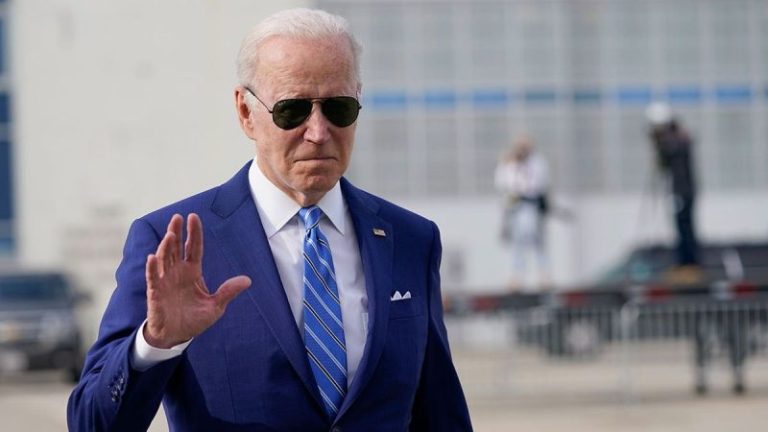
Then-Vice President Joe Biden in 2015 told the CIA he would ‘strongly prefer’ an intelligence report documenting Ukrainian officials’ concerns with his family’s ties to ‘corrupt’ business deals in the country ‘not be disseminated’ — and so it wasn’t, according to a newly-declassified email and records made public by the agency. 

CIA Director John Ratcliffe declassified the heavily redacted records, which he said he believes is an example of ‘politicization of intelligence.’

Fox News Digital obtained the declassified documents, which were discovered during a CIA review of historical agency records.

A senior CIA official briefed Fox News Digital on the declassified documents and intelligence report, stating that the intelligence was discovered along with an email showing that Biden ‘expressed a preference to not share the report.’

Representatives for Biden did not immediately respond to a request for comment from Fox News Digital.

CIA officials discovered and declassified an email dated February 10, 2016, with the subject line stating: ‘RE: OVP query regarding draft [REDACTED].’ The email was sent to the CIA.

The classification of the email was listed, and crossed out, as ‘SECRET.’

‘Good morning, I just spoke with VP/ NSA and he would strongly prefer the report not/not be disseminated. Thanks for understanding,’ the email states, signed by a redacted name, but with the title of ‘PDB Briefer.’ The ‘PDB’ is the presidential daily brief.

The report in question included intelligence revealing that Ukrainian officials viewed the Biden family’s alleged ties to corrupt business practices in Ukraine ‘as evidence of a double-standard within the United States Government towards matters of corruption and political power.’

‘Intelligence officials agreed that, at the time of collection, it would have met the threshold [for dissemination], but based on the Office of the Vice President’s preference, the information was never shared outside of the CIA,’ the official said.

The CIA, during its review, confirmed that Biden’s request was granted and that the intelligence report ‘had not been disseminated.’

The senior CIA official told Fox News Digital that it was ‘extremely rare and unusual’ and ‘inappropriate to go outside of the intelligence community and inquire with the White House on the dissemination of a particular report for what appears to be political reasons.’

The newly declassified intelligence report, which Biden sought to keep private, had a subject line of: ‘NON-DISSEMINATED INTEL INFORMATION: Reactions of [REDACTED] Ukrainian Government Officials to the Early December Visit of Senior United States Government Official.’

The document states the date of the information came in December 2015. The document was created in 2016.

At the time, Biden was vice president and was running U.S.-Ukraine relations and policy for the Obama administration.

The intelligence document stated that ‘officials within the administration of Ukrainian President Petro Poroshenko expressed bewilderment and disappointment at the 7-8 December 2015 visit of the Vice President of the United States to Kiev, Ukraine.’

‘These officials highlighted that, prior to the visit, the Poroshenko administration and other [REDACTED] Ukrainian officials expected the U.S. Vice President to discuss personnel matters with Poroshenko during the visit, and had assumed that the U.S. Vice President would advocate in support of or against specific officials within the Ukrainian Government,’ the intelligence states.

‘After the visit, these officials assessed that the U.S. Vice President had come to Kiev almost exclusively to give a generic public speech, and had not had any intention of discussing substantive matters with Poroshenko or other officials within the Ukrainian government,’ the intelligence states.

‘Following the visit of the U.S. Vice President, [REDACTED] officials within the Poroshenko administration privately mused at the U.S. media scrutiny of the alleged ties of the U.S. Vice President’s family to corrupt business practices in Ukraine,’ the intelligence states. ‘These officials viewed the alleged ties of the U.S. Vice President’s family to corruption in Ukraine as evidence of a double-standard within the United States Government towards matters of corruption and political power.’

Biden, on Dec. 9, 2015, gave a speech in Ukraine, in which he discussed corruption in the country.

‘And it’s not enough to set up a new anti-corruption bureau and establish a special prosecutor fighting corruption,’ Biden said in the speech. ‘The Office of the General Prosecutor desperately needs reform.’

In that speech, Biden also said Ukraine’s ‘energy sector needs to be competitive, ruled by market principles — not sweetheart deals.’

‘It’s not enough to push through laws to increase transparency with regard to official sources of income,’ he said. ‘Senior elected officials have to remove all conflicts between their business interest and their government responsibilities.  Every other democracy in the world — that system pertains.’

At the time, Ukrainian prosecutor Viktor Shokin was investigating Ukrainian natural gas firm Burisma Holdings. Several months later, in March 2016, Biden successfully pressured Ukraine to remove Shokin. At the time Shokin was investigating Burisma Holdings, Hunter Biden had a highly lucrative role on the board, receiving tens of thousands of dollars per month.

Biden, at the time, threatened to withhold $1 billion of critical U.S. aid if Shokin was not fired.

‘I said, ‘You’re not getting the billion.’ … I looked at them and said, ‘I’m leaving in six hours. If the prosecutor is not fired, you’re not getting the money,’’ Biden recalled telling then-Ukrainian President Petro Poroshenko. 

Biden recollected the conversation during an event for the Council on Foreign Relations in 2018.

But during his first term, President Donald Trump was impeached after a July 2019 phone call in which he pressed Ukrainian President Volodymyr Zelenskyy to launch investigations into the Biden family’s actions and business dealings in Ukraine, specifically Hunter Biden’s ventures with Burisma and Joe Biden’s successful effort to have former Ukrainian Prosecutor General Viktor Shokin ousted.

At the same time as that call, Hunter Biden was under federal investigation, prompted by his suspicious foreign transactions. 

Trump was acquitted in Feb. 2020 on both articles of impeachment against him — abuse of power and obstruction of Congress — after being impeached by the House of Representatives in December 2019. 

Meanwhile, the declassified intelligence report had a ‘warning,’ noting that ‘due to the extreme sensitivity, this report should be distributed only to the renamed recipients. No further distribution is authorized without prior approval of the originating agency. Violation of established handling procedures are subject to penalty, including termination of access to this reporting channel.’

It added that ‘any discussion of or reference to information in this report [REDACTED] is strictly prohibited. Any references to this report in derived or finished intelligence should include this warning.’

A senior CIA official told Fox News Digital that Ratcliffe believes the suppression of this intelligence is an example of ‘politicization of intelligence.’

‘Director Ratcliffe believes this is an example of politicization of intelligence that we need to work to eliminate and for what we have zero tolerance,’ a senior CIA official told Fox News Digital. ‘We believe transparency is important. We will release information and avoid any future weaponization of the intelligence community.’

As for the heavily redacted nature of the intelligence report, the senior CIA official told Fox News Digital that the agency was ‘careful about protecting CIA sources and methods with redactions.’

The official stressed that Ratcliffe believes in ‘maximum transparency’ and said he will continue to declassify CIA information and intelligence ‘when it serves the public’s interest.’

Meanwhile, the House of Representatives launched an impeachment inquiry against Biden during his presidency, and found, after years of investigating, that he engaged in ‘impeachable conduct,’ ‘abused his office,’ and ‘defrauded the United States to enrich his family.’ 

This post appeared first on FOX NEWS

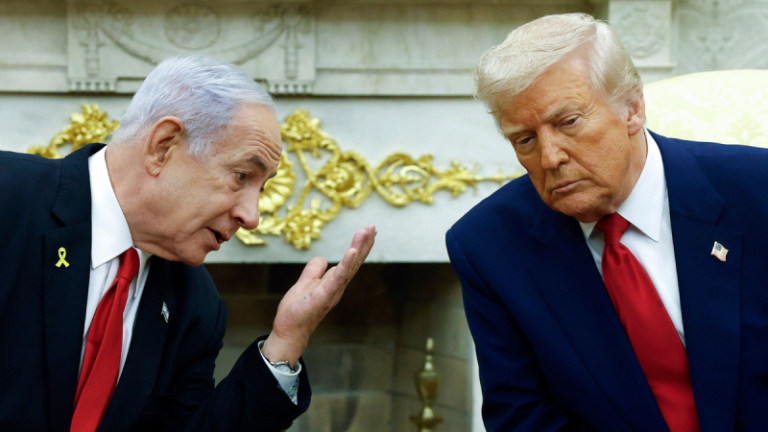
Two years since the horrific events of Oct. 7, 2023 when Hamas terrorists attacked Israel and killed 1,200 men, women and children, before they took 251 others into the Gaza Strip, there is still no hostage deal and Israeli Prime Minister Benjamin Netanyahu’s government is facing possible collapse. 

Netanyahu has found an unlikely ally in former Prime Minister and leader of the opposition, Yair Lapid, who extended a ‘security net’ to the conservative leader this week in a move to secure the government as negotiations with Hamas remain ongoing. 

‘Nothing is more important than making this deal, bringing our hostages back home,’ Lapid said in an interview with Fox News Digital. 

The need for Lapid’s political backing comes as right-wing leaders in Netanyahu’s coalition, National Security Minister Itamar Ben-Gvir and Finance Minister Bezalel Smotrich, have repeatedly criticized Netanyahu’s acceptance of President Donald Trump’s peace plan with Hamas and threatened to leave the coalition at numerous points over the last year. 

Netanyahu’s coalition lost its majority in the Israeli parliament in July when two ultra-Orthodox parties left their ministerial posts after an exemption that granted religious students a pass for military conscription expired. 

The move left Netanyahu’s coalition in control of just 50 of the 120 seats in the Knesset.

‘Now he’s totally dependent on the extreme alt-right within his government that says no to any deal [with Hamas],’ Lapid explained. 

When asked how likely he thought it was that special elections would be triggered once parliament returns from its Autumn break on Oct. 19, Lapid said, ‘very likely.’

A special election is unlikely to happen sooner than February or March 2026, Lapid explained, pointing to a designated time frame that allows for campaigning in Israel, should the Knesset trigger an early election cycle by November – just seven months sooner than the previously scheduled October 2026 elections. 

Lapid believes the Israeli public will favor a more centrist government that would encompass both the right and left, a move that would still prioritize Israeli security, but also ensure there is an end to the war in Gaza and repairs are made to Jerusalem’s international standing.

‘If there’s one thing I’m sorry about, [it] is the fact that nobody in the government has the political courage to stand up and say…this is a just war, we are doing what needs to be done in order to protect ourselves, but we are sorry for every child that loses his life,’ Lapid said. ‘Children should not die in grownups’ wars.’

‘As Jews, as human beings, as people who believe in Judeo-Christian traditions and morality, it’s heartbreaking,’ he added. 

Lapid said this failure of the current government not only led to ambiguity when it came to Israel’s strategy in countering Hamas, it fueled what he said is media bias and false reporting, and it cost Israel dearly in terms of international support, even among ‘groups that traditionally supported Israel.’

The opposition leader described a meeting he had with Netanyahu on Oct. 7, 2023, in which he said the prime minister appeared ‘gray and tired and old all of a sudden.’

 ‘I said something at that meeting that later on became a cliché – I said, ‘Prime Minister, this is the worst day for the Jewish people since the Holocaust. 

‘What we need to do, is form a unity government,’ he said. ‘You have to get rid of the extremists in your government, and we can create a unity of government because we have opposite us, a challenge that is unparalleled to anything you, or I, have ever seen.’

Lapid said Netanyahu was ‘reluctant’ to pursue this route. 

‘Until this day, I’m sorry about this. I thought it was the right thing to do, and I still think it was the right thing to do,’ he added. 

Netanyahu has spent 15 years as Israel’s prime minister, first serving from March 2009 to June 2021, before retaking the top job in December 2022. 

Lapid described his lengthy tenure as ‘admirable’ and emblematic of his ‘resilience.’

‘But in other ways, I can see now, to say politely, the benefits of the two-term limits that you have in the United States,’ he added.

The opposition leader said he thinks Israelis are ready for a ‘unity government’ in response to Netanyahu’s hard-right coalition, noting that he thinks the upcoming elections will be ‘interesting.’

‘It’s going to cross political lines, and it’s going to be based on hope,’ he added in reference to the bloc he is building. ‘I know it sounds like big words, but I’m telling you, it is what we need right now. 

‘It’s been the hardest two years of everybody’s lifetime. And the first time in a long, long time, the fragility of the Israeli society was tangible to us. And we need to rebuild,’ Lapid added. 

Netanyahu’s office did not respond to Fox News Digital’s questions by the time this report was published.

This post appeared first on FOX NEWS

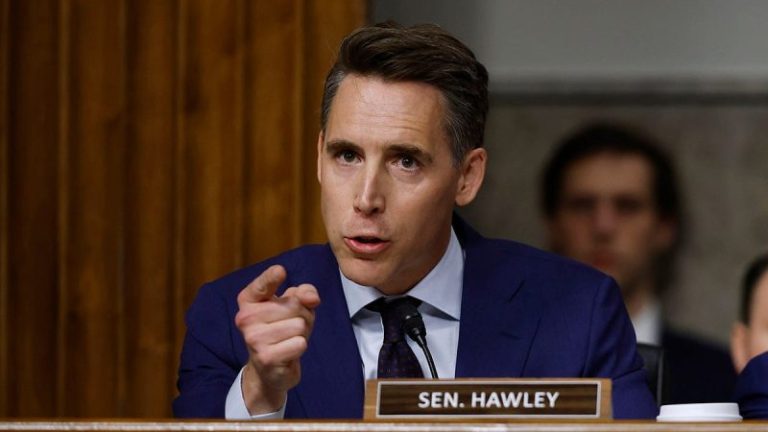
Sen. Josh Hawley, R-Mo., tore into Special Counsel Jack Smith, accusing him of ‘spying on political opponents’ during the Jan. 6 probe and calling the alleged surveillance ‘an abuse of power beyond Watergate.’

The FBI, working under Smith’s direction, obtained call logs and metadata tied to nearly a dozen GOP senators, including Hawley, as part of its investigation into the Capitol riot, Fox News reported. The tracking involved call records and timestamps, not the content of the conversations.

Hawley told Fox News Digital on Monday that the newly released documents suggest that Biden’s administration was ‘spying on the president’s political opponents,’ which he called ‘a profound violation of the separation of powers.’

He said the activity fits what he views as part of a broader pattern of executive overreach under Biden, citing alleged surveillance of Catholic churches, parents at school board meetings and social media censorship.

‘The truth comes out. Biden’s Stasi who claimed to be saving ‘our sacred democracy’ in fact worked overtime to destroy it — all for power. They spied on Catholic churches, prosecuted pro-lifers, deployed the FBI against parents at school board meetings — and tried to tap the phones of their political enemies. Including mine,’ Hawley wrote on X.

‘This is an abuse of power beyond Watergate, beyond J. Edgar Hoover, one that directly strikes at the Constitution, the separation of powers, and the First Amendment,’ he continued. ‘We need a full investigation of all involved: who knew about it, who ordered it, and who approved it. Anyone and everyone who violated the law must be prosecuted. The way to save the country is to restore the rule of law.’

Hawley said he was targeted because he is a conservative Republican who vocally opposed Biden and ‘his lawlessness.’

‘It’s obviously totally partisan,’ the senator said, adding that he’s proud to have called out what he described as the abuse of power by the FBI. He also said the alleged conduct was ‘dangerous, very, very dangerous’ for the country.

Hawley said the scope of the alleged surveillance was even greater than Watergate.

‘This is worse than Watergate,’ he said, arguing that Biden ‘activated the entire government to go after anybody who dared to oppose him.’ He accused the administration of using agencies such as the FBI, DOJ and DHS to silence critics and monitor private citizens.

Hawley called for a full Justice Department investigation and said appointing a special counsel ‘who will devote their full attention to it’ would be appropriate.

‘We’ve got to have a total accountability, total transparency and a full accounting of everybody who was involved in this — everybody who knew about it, signed off on it, and had any part in it, and I just can’t imagine that this is legal… and anybody who committed legal violations needs to be prosecuted,’ he said.

Hawley has framed the controversy as a test of constitutional limits, saying the government must be held accountable when power is used to pursue political opponents instead of upholding the rule of law.

Fox News Digital’s Brooke Singman contributed to this report.

This post appeared first on FOX NEWS

The platinum price broke US$1,600 per ounce on Monday (September 29), its highest level since April 2013.

What’s moving the platinum price? A number of factors are at play in this notoriously volatile market.

As a precious metal, nearly a quarter of demand for platinum comes from the jewelry sector. When the gold price is high, as it is now at nearly US$3,900 per ounce, platinum jewelry becomes an attractive, lower-cost alternative.

With more than 70 percent of demand for platinum metal coming from the industrial and automotive sectors, the market is highly price sensitive to economic cycles. However, despite the current economic uncertainty that’s driving gold higher, the platinum price is being buoyed by stable demand in the auto sector, emerging demand in the hydrogen fuel cell industry and persistent supply challenges out of major platinum-producing nations like South Africa.

Platinum supply under pressure

Supply constraints are an ongoing trend in the platinum market and a major driver of prices in 2025.

In its Q2 Platinum Quarterly, the World Platinum Investment Council (WPIC) predicts that global platinum mine supply will drop by 6 percent to 5.43 million ounces for this year.

Heavy rainfall and flooding in top producer South Africa in the first quarter of the year had a major impact on an industry already reeling from high-cost electricity and dwindling reserves.

In late August, Paul Dunne, CEO of Northam Platinum Holdings (JSE:NPH) in South Africa, told Reuters that a higher platinum price in 2025 will likely not do much to alleviate the pressures facing production in the country.

“Recent price appreciation is offering some relief to the (platinum-group metals) sector,” he said in a statement. “However, it is still not yet at levels that will support sustainable mining across the industry and certainly not the much-needed development of new operations.”

Suffice it to say that problems in the supply side will continue to support platinum over the longer term.

Platinum demand seen as sustainable

As for platinum demand, Mykuliak sees a few key important drivers, including autocatalysts for hybrid vehicles, increased hydrogen adoption for industrial uses and Chinese demand for platinum jewelry as an alternative to gold.

In the automotive industry, platinum is used in catalytic converters for vehicle exhaust systems for emissions control. The rise of electric vehicles (EVs), which do not require catalytic converters to control emissions, is expected to cut into platinum demand over time.

However, high costs and range anxiety are leading auto buyers to choose hybrids over battery EVs. Because hybrid engines still require catalytic converters, the auto sector continues to be a reliable source for platinum demand.

In the hydrogen sector, platinum has a role as a catalyst in the proton exchange membrane electrolyzers used for green hydrogen production and in hydrogen fuel cells. The WPIC has noted that the hydrogen market be ‘a meaningful component of global demand by 2030 and potentially the largest segment by 2040.’

As for jewelry demand, the WPIC is predicting an increase of 11 percent year-on-year to 2.23 million ounces in 2025. China is expected to represent more than one quarter of that growth as the fabrication of platinum jewelry in the region is expected to grow by 42 percent to 585,000 ounces.

Platinum price outlook

The platinum price has since pulled back from the US$1,600 level, coming in at US$1,558 in midday trading on Thursday (October 2). But a correction is expected in the short term, explained Mykuliak, who believes the fundamental outlook for the precious metal is still positive.

“Looking ahead, I expect volatility. My base case is a US$1,650-US$1,750 range by the year-end, with possible dips toward US$1,450 if profit-taking intensifies,” she said. “On the upside, if South African power disruptions worsen or hydrogen policies accelerate, US$1,850-US$1,950 is realistic, with US$2,000 also within reach.”

Securities Disclosure: I, Melissa Pistilli, hold no direct investment interest in any company mentioned in this article.
This post appeared first on investingnews.com

A growing number of lawmakers on both sides of the aisle have declared they’re forgoing their paychecks as the government shutdown drags on.

The federal government has been shut down for nearly a week after Senate Democrats rejected Republicans’ plan to fund agencies through Nov. 21 multiple times.

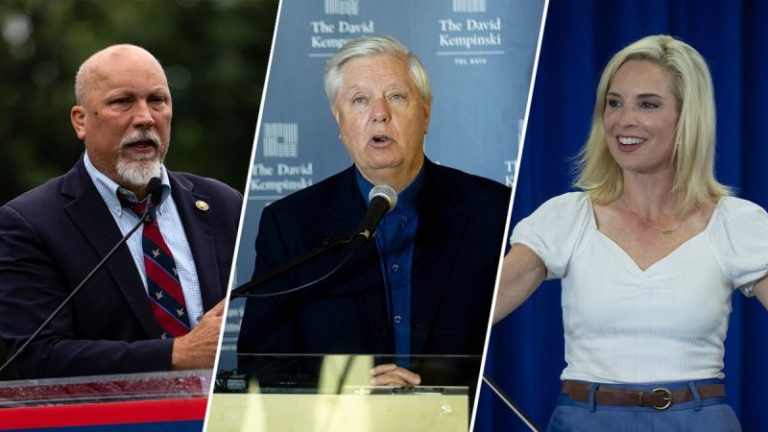
Reps. Chip Roy, R-Texas, Ashley Hinson, R-Iowa, Tom Barrett, R-Mich., Mariannette Miller-Meeks, R-Iowa, and Rob Bresnahan, R-Pa., are among the Republicans who wrote to the Chief Administrative Officer of the U.S. House of Representatives asking for their pay to be withheld during a shutdown.

Democrats like Reps. Josh Gottheimer, D-N.J., and Lou Correa, D-Calif., have requested the same.

But lawmakers requesting their pay be withheld cannot forgo it altogether, because federal law requires them to be paid.

Article I of the Constitution states, ‘The Senators and Representatives shall receive a Compensation for their Services, to be ascertained by Law, and paid out of the Treasury of the United States.’

Further, the 27th Amendment prevents any changes to congressional pay until after the next election.

Most House and Senate lawmakers are paid $174,000 yearly — a figure that has not changed since 2009 — while members of congressional leadership can earn more.

A source familiar with the matter told Fox News Digital that members of Congress can elect to have their pay withheld until a shutdown is over, but they must receive that as backpay when the government is funded again.

Meanwhile, Rep. Joe Morelle, D-N.Y., the top Democrat on the Committee for House Administration, told Bloomberg Government last week that those checks can go into an account separate from lawmakers’ usual salaries. He told the outlet, ‘It’s an administrative way of withholding pay for people who choose to.’

Congressional staffers, meanwhile, automatically miss paychecks if their pay period falls during a government shutdown — but that is also backpaid when the shutdown ends.

Some lawmakers, like Sens. Ashley Moody, R-Fla., and Lindsey Graham, R-S.C., have announced they would donate their paychecks for the duration of the shutdown.

‘Each day the government remains closed, I will be donating my salary to the Crisis Center of Tampa Bay, which provides help to vulnerable populations who may be impacted by this reckless choice,’ Moody said in a statement last week.

This post appeared first on FOX NEWS

Democratic Sen. John Fetterman of Pennsylvania, a staunch and unflinching Israel supporter, wants Hamas to accept the peace deal President Donald Trump is aiming to help broker, and is calling out pro-Palestinian protesters for not demanding that Hamas agree to the peace deal.

‘Good morning to everyone except all the protesters who aren’t protesting for Hamas to accept the peace deal,’ the senator declared in a Sunday post on X.

In a post on Friday, Fetterman shared a screenshot of a Mediaite headline that read, ‘CNN’s Dana Bash Wonders Why Pro-Palestine Movement Isn’t Pressuring Hamas to Accept Trump Deal’ — in his post, the senator commented, ‘For those protesters: Hamas > Peace,’ adding, ‘No flotilla, blocking a highway or disrupting public events demanding Hamas to take the peace deal.’

Israel went to war against Hamas in response to the heinous October 7, 2023, attack in which terrorists committed atrocities including mass murder, rape, and kidnapping. But Trump posted a statement on Truth Social last week in which Hamas declared willingness to negotiate a deal including the release of all hostages, dead and alive.

‘Hamas must choose peace or its own destruction. Send the hostages home, now. As an unapologetic supporter of Israel, the Gaza War must end to have peace and security for Israel and Palestinians. Politics aside, credit to @POTUS’ peace plan to get to this encouraging point,’ Fetterman noted in a Friday post on X, sharing a screenshot of a Reuters headline that said, ‘Hamas says it agrees to release all Israeli hostages under Trump Gaza plan.’

Trump indicated in a Sunday evening Truth Social post, ‘There have been very positive discussions with Hamas, and Countries from all over the World (Arab, Muslim, and everyone else) this weekend, to release the Hostages, end the War in Gaza but, more importantly, finally have long sought PEACE in the Middle East.’  

Later in the post, he warned, ‘TIME IS OF THE ESSENCE OR, MASSIVE BLOODSHED WILL FOLLOW — SOMETHING THAT NOBODY WANTS TO SEE!’

Fetterman accused the Democratic Party of an ‘ongoing and escalating betrayal of Israel,’ in a post on X last month.

Sharing a screenshot of a headline from The Hill that read, ‘Pair of Senate Democrats charge Israel with ‘ethnic cleansing’ of Palestinians,’ Fetterman firmly pushed back.

‘I reject this in the strongest terms. My party’s ongoing and escalating betrayal of Israel is gross and outrageous,’ he asserted.

This post appeared first on FOX NEWS

President Donald Trump made a social media post about Hamas on Sunday evening, minutes before the deadline for a peace proposal passed.

The deadline was 6 p.m. ET Sunday. In a message on Truth Social, Trump wrote that there had been ‘very positive discussions with Hamas, and Countries from all over the World (Arab, Muslim, and everyone else) this weekend, to release the Hostages, end the War in Gaza but, more importantly, finally have long sought PEACE in the Middle East.’

‘These talks have been very successful, and proceeding rapidly,’ Trump said. ‘The technical teams will again meet Monday, in Egypt, to work through and clarify the final details.’

The president added that the first phase of the peace plan ‘should be completed this week.’

‘I am asking everyone to MOVE FAST,’ Trump emphasized. ‘I will continue to monitor this Centuries old ‘conflict.’’

Trump added, ‘TIME IS OF THE ESSENCE OR, MASSIVE BLOODSHED WILL FOLLOW — SOMETHING THAT NOBODY WANTS TO SEE!’

Trump previously announced the deadline in an Oct. 3 post on Truth Social, delivering an ominous warning to Hamas about accepting the deal.

‘If this LAST CHANCE agreement is not reached, all HELL, like no one has ever seen before, will break out against Hamas,’ Trump wrote. ‘THERE WILL BE PEACE IN THE MIDDLE EAST ONE WAY OR THE OTHER. Thank you for your attention to this matter!’

The peace proposal was unveiled by Trump in late September.

The plan calls for an end to Israel’s military operations, the disarmament of Hamas and the reconstruction of the Gaza Strip under a Palestinian governing body overseen by a U.S.-led international coalition.

Israeli  Prime Minister Benjamin Netanyahu’s reportedly agreed to the 20-point plan, per Reuters.

Fox News Digital’s Caitlin McFall and Bonny Chu contributed to this report.

This post appeared first on FOX NEWS